Source 4 pin plastic tailgate switch for repair, replacement, and maintenance
Find and compare 30 listings for the 4 pin plastic tailgate switch from verified suppliers. Buyers can evaluate specifications like model numbers, working voltage, and warranty terms to select the right component for vehicle repair and replacement needs.
Key considerations
Products List


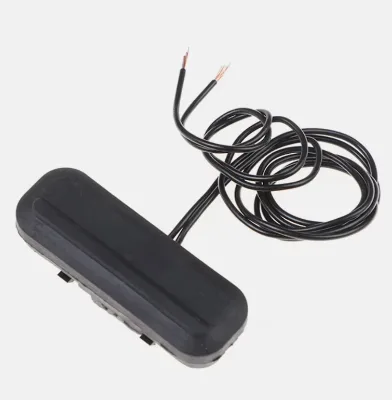


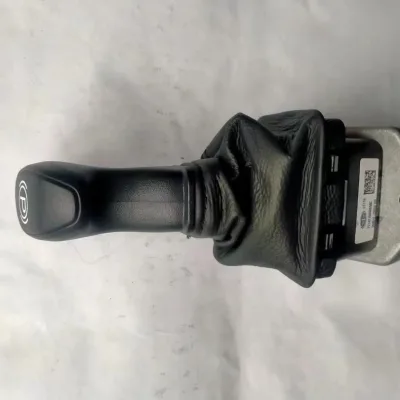
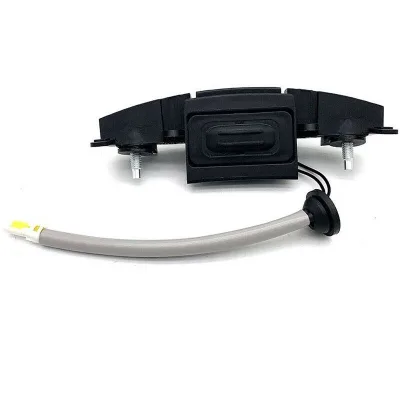


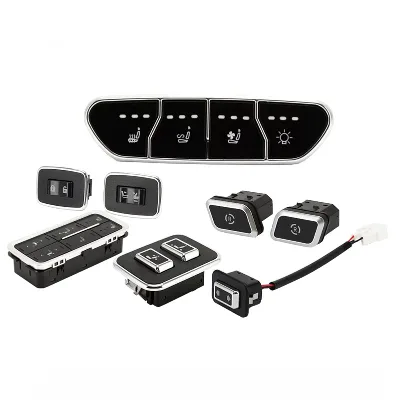

Comprehensive Sourcing Guide
Strategic Sourcing Guide for 4-Pin Plastic Tailgate Switches
Understanding the Technical Architecture and Component Specifications
When sourcing a 4-pin plastic tailgate switch, the primary objective is to identify components that align with specific vehicle electrical architectures while maintaining structural integrity. The core of this component is the switch mechanism itself, which typically operates as a simple button interface designed to trigger the release of a vehicle's tailgate. In the observed market data, the functional design is explicitly described as a "Button" type, indicating a momentary or latching action depending on the internal circuitry. The electrical interface is defined by a "Two" pin configuration in some listings, yet the core keyword specifies a "4-pin" requirement. This discrepancy highlights a critical verification step: buyers must confirm the pin count against the specific vehicle harness. While some data points list "Two" pins, the broader market for tailgate release switches often utilizes multi-pin connectors to accommodate ground, power, signal, and illumination circuits. The working voltage for these units is consistently observed at 12V, which is the standard for light-duty automotive applications.
The physical construction of the switch is predominantly "Plastic," a material choice that offers corrosion resistance and lightweight properties essential for under-hood or under-lid environments. The material composition must be verified to ensure it can withstand temperature fluctuations and potential exposure to moisture. The packaging dimensions vary significantly across suppliers, with observed standard sizes ranging from 1382.6cm to 15X15X10 cm. This variance affects logistics planning and inventory storage. Furthermore, the weight of individual units is a factor in shipping costs, with observed single gross weights ranging from 0.2 kg to 1.000 kg. Buyers should not assume a uniform weight across all listings; instead, they must calculate the total shipping volume based on the specific model number and packaging configuration provided by the supplier. The product status is frequently listed as "IN STOCK," which is a significant advantage for urgent procurement needs, reducing the reliance on long manufacturing lead times.
Compliance, Certification, and Regulatory Verification
Navigating the regulatory landscape is essential for any B2B procurement of automotive components. The supply chain data indicates that a "CE" certification is a high-confidence attribute associated with these products. This certification suggests that the product meets the health, safety, and environmental protection standards for products sold within the European Economic Area. However, the presence of a CE mark in a listing does not automatically guarantee compliance with every regional standard, particularly for the North American or Asian markets where different regulations apply. Buyers must treat the CE listing as an observation of the specific item's documentation rather than a universal guarantee for all inventory.
In addition to certification, the "Quality Control" (QC) status is a critical metric. The provided data references "HIGH QUALITY" and "High Level" quality attributes. These are qualitative descriptions that require quantitative verification. A prudent buyer will request specific test reports or quality assurance protocols to substantiate these claims. The "Condition" of the product is consistently listed as "New," which is a fundamental requirement for replacement parts. However, the term "New" can sometimes be ambiguous in the context of aftermarket parts, potentially referring to refurbished or remanufactured items in some contexts. Therefore, explicit confirmation of the item being brand new and unused is necessary.
The "Standard" for the product packaging is listed as "1382.6cm" or "12108cm," which serves as a physical specification rather than a regulatory standard. While the background information mentions IEC 60947-5-5, this standard is not explicitly confirmed in the high-confidence facts for the specific products listed. Consequently, buyers should not assume compliance with IEC 60947-5-5 without direct confirmation from the supplier. Instead, the procurement strategy should focus on verifying that the switch meets the specific electrical safety standards required by the destination market. The "Warranty" period is a tangible metric for risk mitigation, with observed terms ranging from "12 Months" to "1 Year." This consistency suggests a standard industry practice for this component type, providing a baseline for after-sales support expectations.
Cost Drivers and Pricing Dynamics in the Market
The pricing structure for 4-pin plastic tailgate switches is influenced by several variables, including the model number, customization level, and shipping terms. The observed price range in the market is extensive, spanning from $0.10 to $37.59 USD. This wide disparity indicates that the product is not a commodity with a fixed price but rather a component where value is derived from specific attributes. The lower end of the price spectrum likely corresponds to generic, non-branded units with minimal packaging, while the higher end may reflect branded items, such as those under "ESPEED AUTO," or units with specific OEM part numbers like "13393912."
The "MOQ" (Minimum Order Quantity) is another significant cost driver. The observed range spans from 1 to 1000 units, with a specific high-confidence fact noting an MOQ of "10PCS." This flexibility allows buyers to test the market with small orders or commit to larger volumes for better unit economics. The "Selling Units" are typically listed as "Single item," which facilitates the purchase of individual replacements. However, for bulk procurement, negotiating a lower unit price based on volume is standard practice. The "Price" attribute is described as "Lowest" in some listings, but this is a marketing claim rather than a verified market rate. Buyers should compare this against the specific model numbers and shipping costs to determine the true landed cost.
Shipping costs are a substantial component of the total cost of ownership. The "Freight" method is listed as "Sea," but other options include "DHL, FEDEX, EMS, UPS, BY SEA/AIR." The choice of shipping method dramatically impacts the final price. Air freight is faster but more expensive, suitable for urgent needs where the "Lead Time" of 3-35 days or 30 days is critical. Sea freight is more economical for large volumes but requires longer lead times. The "Place of Origin" is primarily "China," with specific mentions of "Zhejiang, China" and "Shanghai." These locations are major manufacturing hubs, which generally keeps production costs competitive. However, the distance to the buyer's location will influence the freight charges. Buyers must factor in the "TERMS OF PAYMENT," which include "T/T, PayPal, Western Union," and "Tt/LC." The payment terms can affect cash flow and may include fees associated with international transfers or letters of credit.
Typical Applications and Vehicle Compatibility
The primary application for the 4-pin plastic tailgate switch is for the "replace/repair" of existing vehicle systems. The "Purpose" is explicitly defined as a replacement part, indicating that these switches are designed to restore functionality to a tailgate release mechanism that has failed. The "Type" is identified as a "Tailgate Release Switch," confirming its specific role in the vehicle's electrical system. The "Year" compatibility is noted as "2005-2007" in some listings, suggesting that these components are often used for older vehicle models or specific generations of trucks and SUVs. However, the "Colors" are listed as "Original Color / With Plating" or "Depend on Customer," indicating that customization is available to match the aesthetic of the vehicle interior.
The "OEM" number "13393912" is a specific identifier that buyers should cross-reference with their vehicle's parts catalog. This number ensures that the switch is compatible with the specific make and model of the vehicle. The "Model" numbers such as "Fx-10051," "FX-10304," "FX-10157," "FX-10037," "FX-10222," "MXAP045," "Opt-OS703," "Jx-OS393," and "Opt-OS774" represent the various configurations available in the market. Each model number likely corresponds to a specific pin configuration, housing shape, or internal circuit design. Buyers must match these model numbers to their vehicle's requirements to ensure proper fit and function. The "Customization" attribute is listed as "Available," which means that suppliers can produce switches with specific colors, packaging, or branding upon request. This is particularly useful for private labelers or large fleet operators who require uniform branding.
The "Working Voltage" of 12V is a universal standard for automotive electrical systems, ensuring compatibility with most light-duty vehicles. However, the "Number of Pins" remains a critical variable. While some data points mention "Two" pins, the core keyword specifies "4-pin." This suggests that the 4-pin configuration is a specific variant used for more complex circuits, possibly including illumination or signal feedback. Buyers must verify the pin count against their vehicle's harness to avoid installation issues. The "How to Use" instruction is simply "Button," indicating a straightforward user interface. The "Condition" is "New," ensuring that the replacement part will function as intended without the wear and tear associated with used components.
Supplier Evaluation and Operational Reliability
Evaluating a supplier for automotive components requires a rigorous assessment of their operational capabilities and reliability. The "Brand Name" "ESPEED AUTO" is a specific entity mentioned in the data, serving as a reference point for brand recognition. However, buyers should not limit their search to a single brand but rather evaluate the supplier's overall track record. The "Place of Origin" being "China" is a common attribute, but the specific location, such as "Zhejiang" or "Shanghai," can indicate the supplier's proximity to major ports and manufacturing clusters. Suppliers in these regions often have established logistics networks that can facilitate efficient shipping.
The "Delivery" time is a critical operational metric, with observed ranges of "3-35 DAYS" or a specific "30 Days" lead time. This variability underscores the importance of clear communication regarding production schedules. A supplier with a consistent "3-35 days" window may be more reliable than one with a fixed "30 days" if the latter cannot accommodate rush orders. The "PRODUCT STATUS" being "IN STOCK" is a significant advantage, as it eliminates the waiting period for manufacturing. However, buyers should verify the actual stock levels to ensure that the supplier can fulfill large orders without delays. The "PACKAGE" options, including "Neutral Packing," "White Box," or "Clients Requested," offer flexibility for different distribution strategies. Neutral packing is often preferred for private labeling, while white box packaging may be suitable for retail distribution.
The "Payment" terms, including "T/T, PayPal, Western Union," and "Tt/LC," provide various options for financial transactions. Buyers should choose the method that best suits their risk management strategy. "T/T" (Telegraphic Transfer) is common for established relationships, while "LC" (Letter of Credit) offers more security for large transactions. The "QC" (Quality Control) status of "HIGH QUALITY" is a claim that must be validated through samples and inspection reports. Buyers should request a sample batch to verify the build quality, material durability, and electrical performance before committing to a large order. The "Single gross weight" of 1.000 kg and "Kg/Piece" of 0.2 to 0.3 kg are useful for calculating shipping costs and handling requirements.
Long-Term Procurement Considerations and Quality Assurance
Sourcing a 4-pin plastic tailgate switch is not just a one-time transaction but part of a long-term supply chain strategy. The "Warranty" of "12 Months" or "1 Year" provides a safety net for defective products, but buyers should also consider the supplier's ability to handle warranty claims efficiently. A supplier with a robust after-sales support system will be more valuable in the long run. The "Customization" availability allows for future adaptability, enabling buyers to modify the product to meet changing market demands or vehicle specifications. The "Colors" being customizable ensures that the product can be tailored to specific aesthetic requirements, which is crucial for maintaining brand consistency in the aftermarket.
Quality assurance is paramount in the automotive industry. The "QC" attribute of "HIGH QUALITY" must be backed by concrete evidence, such as ISO certifications or internal quality control processes. Buyers should request documentation that verifies the "Condition" as "New" and the "Material" as "Plastic" with appropriate durability ratings. The "Standard" packaging dimensions and "Single package size" are important for logistics planning, ensuring that the product can be stored and shipped efficiently. The "Lead Time" of 3-35 days or 30 days should be factored into the inventory management strategy to prevent stockouts. The "Shipping Term" options, including "DHL, FEDEX, EMS, UPS, BY SEA/AIR," offer flexibility in meeting delivery deadlines.
In conclusion, sourcing a 4-pin plastic tailgate switch requires a comprehensive understanding of the technical specifications, compliance requirements, cost drivers, and supplier capabilities. By carefully evaluating the observed data and verifying the claims through direct communication with suppliers, buyers can secure high-quality components that meet their specific needs. The wide range of models, customization options, and shipping methods available in the market provides ample opportunities for strategic procurement. However, the variability in pin counts, packaging, and lead times necessitates a diligent approach to ensure that the selected product is the right fit for the intended application.
FAQs
What is the working voltage for this switch?
The working voltage is 12V, which is standard for light-duty automotive applications. This ensures compatibility with most vehicle electrical systems without requiring voltage conversion.
Can I get this switch with custom packaging?
Yes, customization is available for packaging options like neutral packing or client-requested designs. Buyers can specify requirements to match their distribution strategy or branding needs.
Which certification does this product hold?
The product holds CE certification, indicating compliance with health and safety standards for the European Economic Area. Buyers should verify if additional regional certifications are required for their specific market.
How long is the warranty period?
The warranty period is typically 12 months or one year. This provides a standard baseline for after-sales support and risk mitigation for replacement parts.
What is the minimum order quantity?
The minimum order quantity can be as low as 10 pieces, though some listings allow orders starting from 1 unit. This flexibility supports both small testing orders and larger bulk procurement.
Where is the product manufactured?
The product originates from China, with specific locations including Zhejiang and Shanghai. These regions are major manufacturing hubs known for competitive production costs and established logistics networks.
What is the lead time for delivery?
The lead time ranges from 3 to 35 days depending on stock availability and shipping method. Some items are listed as in stock, which can significantly reduce waiting periods.